What is Mean Kinetic Temperature (MKT)?

Mean Kinetic Temperature (MKT): A Scientific Explanation

What is Mean Kinetic Temperature (MKT)?

Mean Kinetic Temperature (MKT) is a calculated value that estimates the overall impact of temperature variations on temperature-sensitive products during storage and transportation. In other words, MKT represents an equivalent average temperature that simulates the effect of temperature fluctuations on a product over its lifecycle, taking into account not only the extreme temperatures but also the duration of each exposure.

MKT is particularly used in industries such as pharmaceuticals, biopharmaceuticals, food, and other sectors where products are sensitive to temperature changes. These products can undergo chemical or physical alterations due to temperature fluctuations, compromising their quality, effectiveness, or safety. MKT provides a better understanding of the global thermal impact on these products, even if the actual temperature varies over time.

Why is MKT Important?

MKT is a valuable indicator in evaluating the integrity of temperature-sensitive products. Unlike simple average temperature, which does not account for temperature variations or their duration, MKT takes into consideration the cumulative effect of temperature fluctuations, assigning more weight to periods of higher temperatures, which are generally more damaging to the products.

This indicator helps manufacturers, distributors, and regulators determine if a product has been exposed to temperature conditions that could affect its characteristics (such as stability, effectiveness, or safety) during transport or storage. Moreover, in industries dealing with products like medications, vaccines, or perishable goods, MKT provides a reliable method to ensure that products remain within required temperature ranges throughout their supply chain.

How to Calculate MKT?

The calculation of Mean Kinetic Temperature involves using a formula that combines measured temperatures at various times and the duration of exposure to those temperatures. The standard formula used to calculate MKT is as follows:
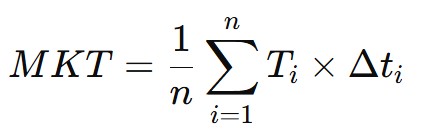
where:

  • T_i is the temperature measured at time i (expressed in degrees Celsius or Fahrenheit).
  • Δt_i is the duration for which temperature T_i was maintained (expressed in hours, minutes, or seconds).
  • n is the number of measurements taken during the studied period.

However, for a more precise calculation of MKT, especially when considering the effect of each temperature variation on the product’s stability, a formula that incorporates the concept of thermal activation factor (often based on Arrhenius-type equations) is commonly used. The more advanced formula, integrating this factor, is:
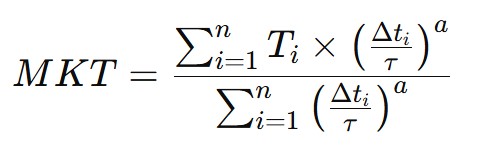
where:

  • T_i is the temperature measured at a given moment,
  • Δt_i is the duration of exposure to that temperature,
  • τ is a time constant, representing the average exposure duration of the product to a given temperature,
  • a is an empirical parameter that represents the product’s sensitivity to temperature variations (often estimated through laboratory studies on product stability).

This more complex model allows for weighting the impact of periods during which the product is exposed to extreme temperatures (e.g., high or low temperatures), which are typically more harmful than periods at moderate temperatures.

To simplify this process, Thermolabo offers temperature data loggers that automatically calculate MKT. These tools are designed for professionals who demand traceability and precision in temperature monitoring.

Practical Applications of MKT

Mean Kinetic Temperature is widely used in industries where thermal management is critical. In the pharmaceutical field, for instance, medications or vaccines requiring strict cold chain management can be monitored using MKT. If the temperature exceeds specified limits for a significant duration, MKT can indicate a risk of product degradation.

In the food industry, MKT is used to ensure that perishable goods such as meat or dairy products are stored and transported at safe temperatures, preventing bacterial growth and other temperature-related alterations.

Conclusion

Mean Kinetic Temperature (MKT) is a crucial concept for assessing the thermal impact on temperature-sensitive products. By accounting for the cumulative effect of thermal fluctuations, MKT provides a reliable method for ensuring product quality and effectiveness while meeting regulatory standards. When calculated properly, MKT offers valuable data for improving supply chain management and logistics of temperature-sensitive products, whether they are medications, food items, or other goods sensitive to temperature.
Why Monitoring the Temperature of Your Temperature-Controlled Shipments?

Why You Must Monitor the Temperature of Your Temperature-Controlled Shipments?

Cold chain management is essential in numerous industries, particularly in the pharmaceutical, food, and medical sectors. A fundamental aspect of this management is the precise monitoring of temperature-sensitive products during transport. Temperature-sensitive products such as medications, vaccines, food, and biological samples require strictly controlled conditions to ensure their safety, efficacy, and quality. To achieve this, using a temperature data logger is essential. But why is it so important to monitor temperature during temperature-controlled transport? This article explores the reasons why temperature monitoring is critical and how a temperature data logger can help ensure the compliance and safety of your products.

1. Ensure the Safety of Temperature-Sensitive Products

Temperature-sensitive products, whether they are medications, vaccines, food, or biological samples, can be altered or lose effectiveness if exposed to inappropriate temperatures. A simple temperature deviation can result in the degradation of the product, leading to serious consequences. For instance, vaccines must be transported and stored under very specific conditions, and any temperature fluctuation can compromise their efficacy, putting patients’ health at risk.

Temperature data loggers allow for real-time tracking of the temperature of products throughout transportation, ensuring that they remain in optimal conditions. This not only helps prevent the loss of product quality but also ensures the safety of the consumers receiving those products.

2. Comply with Regulations and Standards

In many industries, particularly in the pharmaceutical and food sectors, adhering to regulations and standards is imperative. Cold chain transport regulations are strict, and they require documentation, monitoring, and ensuring that products are properly conserved. Failing to meet these requirements can lead to penalties, fines, or even the loss of commercial licenses.

Using a temperature data logger enables the collection of precise, traceable data on transport conditions. This data can be used to prove that products were transported under the conditions required by regulations. Additionally, during audits or regulatory inspections, these records will serve as proof that the cold chain was respected throughout the process.

3. Prevent Product Loss and Associated Costs

Temperature-sensitive products often represent significant investments for businesses. Any errors in temperature management during transport can result in significant financial losses due to product degradation. For example, in the pharmaceutical industry, losing batches of medications or vaccines due to a cold chain break can lead to high replacement costs and damage the company’s reputation.

By proactively monitoring temperature during transport with a temperature data logger, you can prevent costly product losses. These devices can instantly detect any temperature deviations, allowing responsible parties to take corrective actions before irreversible damage occurs.

4. Improve Traceability and Transparency

One of the main advantages of modern temperature data loggers is their ability to provide detailed reports and temperature histories that can be accessed at any time. These devices continuously record temperature data and timestamp it to ensure full traceability. In case of any issues or non-compliance, these detailed reports help pinpoint exactly where and when a cold chain break occurred.

This traceability is crucial not only for internal audits but also for external inspections. Temperature data loggers provide complete transparency throughout the product transport process. This strengthens the trust of both customers and regulators in the safety and quality assurance practices of your business.

5. Optimize Logistics Costs

Temperature monitoring during transport can also help optimize logistics costs. By quickly detecting anomalies, temperature data loggers reduce the risks associated with cold chain disruptions, minimizing costs related to product returns or replacements. Moreover, analyzing the temperature data collected during transport can help identify inefficiencies in logistics processes, such as idle periods in refrigerated areas or frequent temperature deviations, which can lead to corrective measures that improve the overall distribution chain.

6. Ensure Customer Satisfaction

Consumers and healthcare professionals expect products to arrive in perfect condition and under optimal conditions. Any cold chain breakage can compromise customer satisfaction, as they may receive products that are of poor quality or ineffective. Rigorous temperature monitoring during transport ensures that products arrive in the best possible condition, maintaining customer satisfaction and fostering brand loyalty.

7. Use a USB Temperature Data Logger to Simplify Management

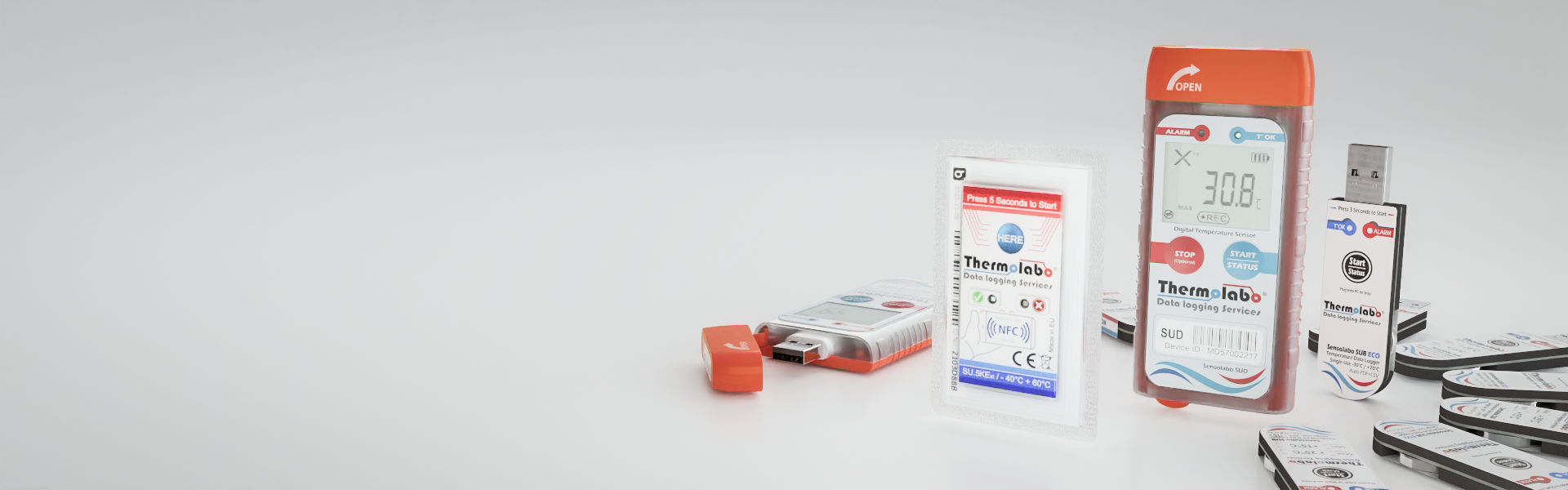
One of the simplest and most effective tools to monitor the temperature of temperature-controlled shipments is the USB temperature data logger. This device continuously records the temperature throughout transport and allows for easy data retrieval by simply plugging it into a computer. A USB temperature data logger generates detailed, timestamped reports, providing complete traceability and simplifying data management.

Conclusion

Monitoring the temperature during temperature-controlled transport is essential to ensure the safety, quality, and compliance of temperature-sensitive products. With tools like USB temperature data loggers, you can ensure that your products are kept within the required temperature range, reduce the risk of losses and errors, and optimize logistics costs. These tools also provide complete traceability and real-time monitoring, improving transparency and building trust with customers.

By investing in reliable temperature monitoring solutions, you not only safeguard the quality of your products but also ensure compliance with regulations, prevent financial losses, and optimize your logistics processes.

GDP requirements (Updated Jan 2023)

Is it acceptable that storage conditions are not monitored for medicinal products which do not have any predefined storage conditions on the outer packaging?

No. According to the PDF icon Guideline on declaration of storage conditions (CPMP/QWP/609/96 Rev. 2) marketing authorisation holders have to provide stability data for storage conditions at 25°C / 60% relative humidity (RH), or 30°C / 65% RH (long term) and 40°C / 75% RH (accelerated), in order to justify not including a statement in the medicinal product labelling.

This stability data is generated according to the temperature and humidity conditions of climate zone I (temperate) and II (Mediterranean/subtropical) in Europe. For more information, see the World Health Organization Expert Committee on Specifications for Pharmaceutical Preparations forty-third report, Annex 2: Stability testing of active pharmaceutical ingredients and finished pharmaceutical products.

No labelling statement means that controls should be in place to maintain conditions relevant to climate zones I and II. Consequently, the temperature should be monitored during storage and transport. Appropriate limits should be set for temperature monitoring to ensure that product stability is not adversely affected.

Lien vers le texte original ICI.

clavier de protection des données

Management of Data from Data loggers

Temperature Management

Traditionally, the data processing activity consists of reconciling raw data from autonomous recorders to information metadata (product identification, transport information, etc.)

Most current data processing processes combine electronic data with paper information in a coexistence that requires either paper printing or the digitization of paper documents, or sometimes both.

Read More

pharmacienne qui se pose des questions

Recommendations concerning the transport of health care products under controlled temperatures

Good Manufacturing and Distribution Practices

Within the framework of their public health responsibilities (articles R. 5124-36, R. 5124-48, R. 5121-23 and L. 5124-2 paragraph 2 of the Public Health Code, Good Manufacturing and Distribution Practices, etc.), pharmaceutical establishments must provide a high level of quality in the manufacturing of health care products for dispensing to patients.

Read More